How to Lower Your Utility Bills: 20 Proven Ways to Save on Electricity, Gas, and Water
The average American household spends around $3,300 per year on utilities: electricity, natural gas, water, and internet. That's $275 a month leaving your account for services that feel impossible to reduce. But the reality is most households can cut utility costs by 20–35% with a mix of habit changes and modest investments.
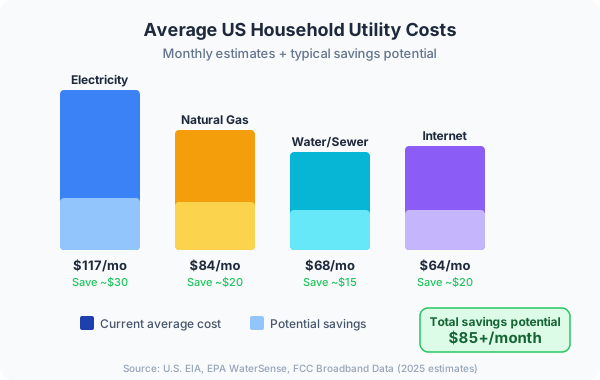
Here are 20 proven strategies, ranked roughly from easiest (zero cost, immediate impact) to more involved (small investment, larger long-term savings).
Electricity: The Biggest Bill
1. Adjust your thermostat by 7–10 degrees when you're away or asleep
The U.S. Department of Energy estimates you can save about 10% on heating and cooling by dialing back 7–10°F for 8 hours a day. That's the single highest-impact, zero-cost change you can make. A programmable thermostat (or smart thermostat) automates this.
Impact: $100–$180/year on average
2. Switch to LED bulbs
If you haven't done this yet, it's overdue. LED bulbs use 75% less energy than incandescent bulbs and last 25 times longer. A 10W LED replacing a 60W incandescent saves about $9/year per bulb. A typical home has 30–40 light fixtures.
Impact: $100–$200/year for a full home switch
3. Unplug electronics and use smart power strips
Devices in "standby" mode still draw power — this is called phantom load or vampire power. Your TV, game console, microwave, and phone chargers all do this. The average home wastes $100–$200/year on phantom load. Smart power strips cut power to all devices when you turn off the main device.
Impact: $50–$150/year
4. Run appliances during off-peak hours
Many utility companies charge time-of-use rates — electricity costs less at night (typically 9 PM–7 AM) and on weekends. Running your dishwasher, washing machine, and dryer during off-peak hours takes advantage of lower rates.
Check your utility company's website or call them to ask if you're on a time-of-use plan. If you're not, ask to switch.
Impact: $100–$300/year depending on your rate structure
5. Adjust your water heater temperature
Factory default is often 140°F. Most households can safely lower it to 120°F. Every 10°F reduction saves 3–5% on water heating costs. At 120°F, you'll still get hot showers but waste less energy heating water hotter than you need.
Impact: $15–$30/year (small but zero effort)
6. Air-seal your home
Heat escapes through gaps around windows, doors, outlets, and attic hatches. Weatherstripping and caulk are cheap ($5–$30 per project) and can noticeably reduce how hard your heating and cooling system works.
Focus on:
- Door sweeps and weatherstripping on exterior doors
- Caulk around window frames
- Foam gaskets behind electrical outlets on exterior walls
- Attic hatch insulation
Impact: $150–$400/year depending on how drafty your home is
7. Clean or replace HVAC filters monthly
A clogged filter makes your system work harder, using more energy and wearing out faster. Filters are $1–$10 each. Many homeowners forget this simple monthly task.
Impact: 5–15% reduction in HVAC energy use ($50–$150/year)
8. Use ceiling fans strategically
Ceiling fans don't actually cool air — they create a wind chill effect that makes you feel cooler. You can raise your AC thermostat by 4°F with a ceiling fan running and feel the same comfort. Switch fan direction for winter (clockwise, low speed) to recirculate warm air that rises to the ceiling.
Impact: $50–$100/year if you'd otherwise run AC or heating more
Natural Gas and Heating
9. Lower water heater to 120°F and insulate the tank
Already covered the temperature setting. If you have an older water heater (pre-2004), adding an insulating blanket ($25–$50) can reduce heat loss by 25–45%. Modern water heaters don't need this — check the manufacturer's instructions.
Impact: Combined with temperature setting: $30–$60/year
10. Use space heaters strategically instead of heating the whole house
If you're spending most of your time in one room, it's often cheaper to heat that room with a space heater and lower the central thermostat than to heat the entire house. Space heaters are 100% efficient at converting electricity to heat.
This works best if you have gas central heating — keeping the house at 60°F and using a small electric space heater in your workspace can save money when gas is cheap and electricity isn't too expensive.
Warning: This strategy can backfire if your electricity rates are high relative to gas. Do the math for your specific situation.
Impact: Varies widely. Potentially $50–$150/year in the right circumstances.
11. Insulate pipes
Insulating hot water pipes keeps water warmer as it travels from your water heater to your faucets. Foam pipe insulation is $3–$10 per 6-foot section. You'll also get hot water faster, wasting less water waiting for it to heat up.
Impact: $10–$40/year (small but easy)
Water Bills
12. Fix leaking toilets and faucets immediately
A leaking toilet can waste 200 gallons per day — that's 6,000 gallons a month. A faucet dripping once per second wastes 3,000 gallons per year. Most toilet leaks are caused by a worn flapper valve, which costs $5–$15 to fix.
Test your toilet: add food coloring to the tank. If it shows up in the bowl without flushing, you have a leak.
Impact: $50–$200/year if you have active leaks
13. Install low-flow showerheads and faucet aerators
Low-flow showerheads ($10–$40) reduce water use from 2.5 gallons per minute to 1.5–2 GPM while maintaining good pressure. Faucet aerators ($1–$5) add air to the water stream, reducing flow without affecting usability.
A household of four can save 20,000+ gallons per year with these changes.
Impact: $50–$150/year on combined water + water heating bills
14. Run full loads in dishwashers and washing machines
A dishwasher cycle uses 6 gallons. A top-loading washing machine uses 30–45 gallons per load. Running half-full loads doubles your cost per dish or shirt washed. Always wait for full loads.
Also: dishwashers are actually more water-efficient than handwashing for full loads.
Impact: $30–$80/year depending on household size and current habits
15. Reduce lawn watering
Outdoor water use accounts for 30% of household water consumption on average, and up to 70% in hot, dry climates. Most lawns only need 1 inch of water per week including rainfall.
Strategies:
- Water in early morning to minimize evaporation
- Use a rain gauge to avoid overwatering
- Install a rain sensor on automatic irrigation systems ($20–$50)
- Consider drought-tolerant landscaping for long-term savings
Impact: $50–$300/year depending on your lawn and climate
Internet and Other Utilities
16. Call your internet provider and ask for a lower rate
Internet providers routinely offer promotional rates to new customers. If you've been a customer for more than a year, call and say you're considering switching to a competitor. Most retention departments have the authority to lower your rate by $10–$30/month.
If that doesn't work, actually check competitor pricing and consider switching. Internet providers count on inertia.
Impact: $120–$360/year if successful
17. Audit your services and eliminate unused ones
Review your monthly bills for:
- TV/streaming you don't watch regularly
- Landline phone you never use
- Cloud storage plans you've outgrown (or underuse)
- Premium internet speeds you don't need
Many people pay for services out of habit, not utility.
Impact: Varies — could be $0 or $50+/month
18. Check for utility assistance programs
Low-income households may qualify for:
- LIHEAP (Low Income Home Energy Assistance Program) — federal program for heating/cooling bills
- State energy assistance programs
- Utility company budget billing (spreads annual cost evenly to avoid high-winter bills)
- Income-based rate discounts offered by some utilities
Visit needhelppayingbills.com or call your utility directly to ask about assistance programs.
Impact: Could be hundreds to thousands of dollars annually for qualifying households
Bigger Investments with Strong Returns
19. Install a smart/programmable thermostat
Smart thermostats like the Google Nest ($100–$250) or Ecobee ($200–$250) pay for themselves in 1–2 years through automated temperature optimization. They learn your schedule, adjust for outdoor temperature, and can be controlled from your phone. Simpler programmable thermostats ($20–$50) give you most of the benefit for a fraction of the cost.
Payback period: 1–3 years
20. Add attic insulation
If your attic has less than R-38 insulation (about 12 inches of blown cellulose), adding more is one of the best ROI home improvements you can make. The Energy Star program estimates homeowners save an average of 15% on heating and cooling bills with proper attic insulation. Cost is $1,500–$3,000 for a typical home, and many utilities offer rebates.
Payback period: 3–6 years; eligible for 30% federal tax credit through 2032
How to Prioritize
If you're just getting started, here's a practical sequence:
- First week (free): Lower thermostat 7°F overnight, unplug chargers and unused devices, check toilet for leaks, call internet provider
- First month ($20–$50): Buy LED bulbs for high-use fixtures, add weatherstripping to drafty doors, fix any toilet leaks
- First year ($100–$300): Install smart thermostat, low-flow showerheads, and air seal obvious gaps
Following this sequence could reduce utility bills by $600–$1,000/year for an average household. The zero-cost changes alone can save $200–$400/year.
The key is treating utility reduction as a one-time project rather than an ongoing chore. Make the changes, then enjoy the lower bills.
Enjoyed this guide? Subscribe to Frugal Rise — a free newsletter covering practical personal finance tips, delivered weekly.