Cryptocurrency for Beginners: What Every Frugal Investor Needs to Know
Cryptocurrency is impossible to ignore. Bitcoin, Ethereum, and hundreds of other digital currencies get covered constantly in financial media. If you're trying to make sensible financial decisions, you need to understand what crypto actually is — not the hype version, and not the dismissive "it's all fake" version either.
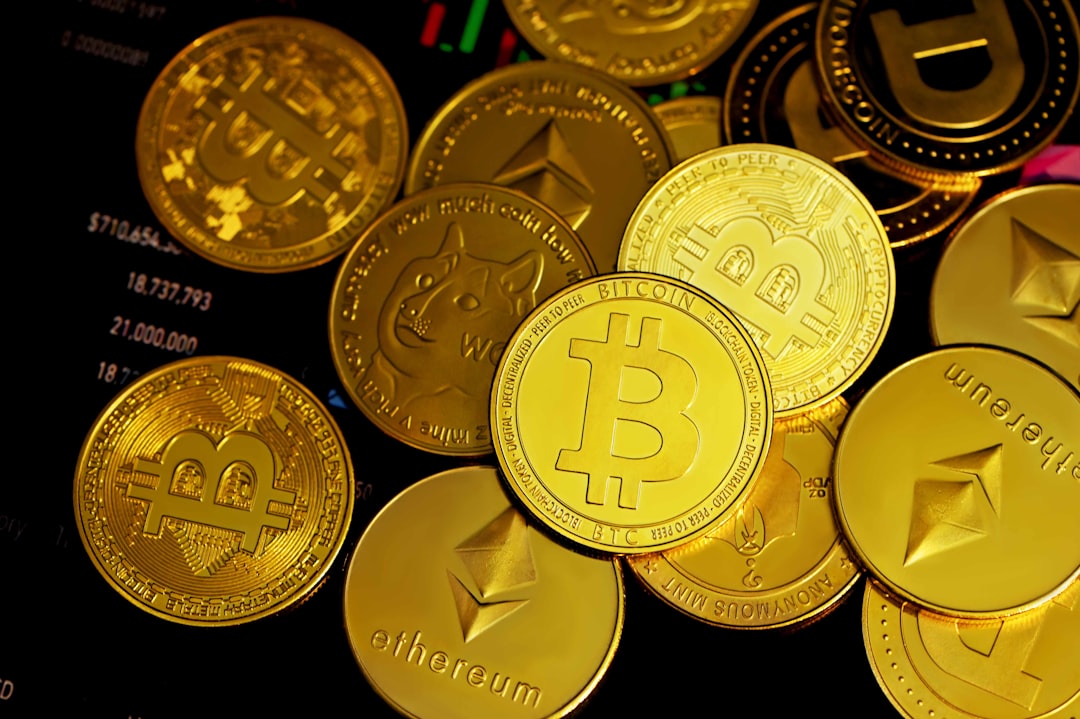
Photo by Kanchanara on Unsplash
Here's a straightforward guide to cryptocurrency: what it is, how it works, the real risks, and how to think about it as someone who cares about building lasting wealth.
What Is Cryptocurrency?
Cryptocurrency is a form of digital money secured by cryptography and typically recorded on a distributed ledger called a blockchain. The most important properties:
No central authority: Unlike dollars (backed by the US government) or bank deposits (backed by the FDIC), most cryptocurrencies have no institution guaranteeing them. The "value" comes from what people are willing to pay.
Digital and transferable: You can send cryptocurrency directly to anyone in the world without a bank as intermediary, usually in minutes for a small fee.
Finite supply (for Bitcoin): Bitcoin has a hard cap of 21 million coins. This is different from dollars, which the government can print more of.
Public, transparent ledger: All Bitcoin transactions are recorded on a public blockchain anyone can inspect. Your wallet address is pseudonymous (not directly tied to your name), but not truly anonymous.
The Major Cryptocurrencies
Bitcoin (BTC): The original. Created in 2009 as a peer-to-peer electronic cash system. Now used primarily as a speculative investment / "digital gold." By far the most established.
Ethereum (ETH): Created in 2015 as a programmable blockchain. Powers "smart contracts" and decentralized applications. Has more varied use cases than Bitcoin.
Everything else ("altcoins"): Thousands of other cryptocurrencies exist. Most have little to no lasting value and many are outright scams. Some (like Solana, Cardano) have genuine technology behind them. Most eventually go to zero.
The Honest Case For Crypto
There are legitimate reasons people include small amounts of cryptocurrency in their portfolios:
High upside potential: Bitcoin rose from under $1 in 2010 to over $60,000 at its peak. Early investors made fortunes. Similar (though less dramatic) gains happened with Ethereum.
Inflation hedge argument: Some people hold Bitcoin as protection against currency debasement. This argument is contested but not without merit — Bitcoin's fixed supply does make it structurally different from currencies governments can inflate.
Genuine technological innovation: Blockchain technology has real applications in finance, supply chain, and ownership records. Some of the underlying technology may have lasting impact.
Portfolio diversification: Crypto has historically shown low correlation with stocks and bonds (though this correlation has increased as crypto has gone mainstream). A small allocation may reduce overall portfolio volatility.
Want more investing guides? Get guides like this in your inbox — Frugal Rise delivers one free deep-dive every week.
The Honest Case Against (or For Extreme Caution)
Extreme volatility: Bitcoin dropped 80% from its 2021 peak to its 2022 low. A $10,000 investment became $2,000. This is not unusual — Bitcoin has experienced multiple 50%+ drawdowns. Can you emotionally and financially handle that?
No intrinsic value: Stocks represent ownership of businesses that generate cash flow. Bonds pay interest. Real estate produces rent. Crypto produces nothing — its value is entirely based on what someone else will pay for it later. This makes valuation genuinely impossible.
Regulatory risk: Governments can and do regulate cryptocurrency. China banned it entirely. The US SEC has taken action against multiple exchanges. Future regulation could dramatically impact value.
Security and custody risk: If you lose your private keys, your crypto is gone permanently. If an exchange is hacked or goes bankrupt (like FTX in 2022), your funds may disappear. There's no FDIC insurance.
Scams are everywhere: The crypto space has an extraordinarily high density of fraud — pump-and-dump schemes, rug pulls, fake exchanges, celebrity endorsements, and projects designed to steal your money. Even sophisticated investors have been defrauded.
Most altcoins go to zero: Of the thousands of cryptocurrencies created, the vast majority have lost nearly all their value. "Diversifying" across multiple cryptos mostly just diversifies your losses.
How Frugal Investors Should Think About Crypto
If you're reading this site, you're focused on building real, lasting wealth — not gambling. Here's a framework:
Rule 1: Get your fundamentals right first.
Before considering any crypto allocation, you should have:
- An emergency fund (3–6 months expenses)
- No high-interest consumer debt
- At least some money in tax-advantaged accounts (401k at least to the employer match, Roth IRA if eligible)
- A basic investment portfolio in index funds
If you don't have these, crypto should not be on your radar. These foundational moves have proven, predictable outcomes. Crypto does not.
Rule 2: Only invest what you can afford to lose entirely.
Not "what you can afford to see drop 50%." The entire amount. Because there's a non-trivial scenario where any given cryptocurrency goes to zero.
If losing $500 would meaningfully hurt you, don't invest $500. If losing $2,000 would set back your financial goals, don't invest $2,000.
Rule 3: Keep any allocation small.
Financial advisors who include crypto at all typically suggest 1–5% of investment portfolio. Not because 5% is optimal, but because if crypto goes to zero, a 5% loss is recoverable. A 50% loss is not.
Rule 4: Stick to Bitcoin and possibly Ethereum.
If you're going to invest in crypto at all, Bitcoin and Ethereum have the longest track records and largest ecosystems. The risk of them going to zero is lower than any altcoin — though still real.
Avoid: meme coins (Dogecoin, Shiba Inu), obscure altcoins, any crypto promoted heavily on social media, anything promising guaranteed returns.
Rule 5: Buy through reputable exchanges, use cold storage for significant amounts.
Coinbase and Kraken are the most regulated, established US exchanges. Never keep large amounts on any exchange long-term — exchanges can fail (see: FTX, Celsius, Voyager). For amounts over a few hundred dollars, a hardware wallet (cold storage) is worth the $60–80 cost.
The Tax Situation
Cryptocurrency is treated as property by the IRS, not currency. This has important implications:
- Every sale, trade, or purchase using crypto is a taxable event
- If you sell crypto for more than you paid, you owe capital gains tax
- Short-term gains (held under 1 year) are taxed as ordinary income
- Long-term gains (held 1+ year) receive preferential capital gains rates
- You must track cost basis for every transaction
This makes crypto meaningfully more complicated to include in a tax-efficient portfolio. If you're not prepared to keep detailed records and report gains, this is another reason to keep your allocation very small or zero.
What About Crypto IRAs?
Some companies offer self-directed IRAs that hold cryptocurrency. The tax-deferred or tax-free growth could be significant if crypto appreciates.
The downsides: these accounts charge high fees (often 1–2% annually plus transaction fees), add complexity, and lock you into a non-standard custodian. Unless you have very high conviction in crypto long-term and are already maxing standard retirement accounts, the added fees and complexity usually outweigh the benefits.
The Bottom Line for Frugal Investors
Cryptocurrency is real, it's not going away, and some people have made significant money with it. It has also destroyed fortunes, spawned thousands of scams, and lost most people who bought near peaks considerable amounts of money.
The prudent frugal investor approach: get your financial foundation solid first. If you want crypto exposure after that, keep it small (1–5% of investments), stick to Bitcoin/Ethereum, use reputable exchanges, and treat it as a speculative position — not a retirement plan.
Most importantly: don't let FOMO (fear of missing out) drive financial decisions. The best investments are boring, predictable, and compounding quietly in the background. Crypto is neither boring nor predictable.