Should You Buy or Rent? A Realistic Framework for 2026
Should You Buy or Rent? A Realistic Framework
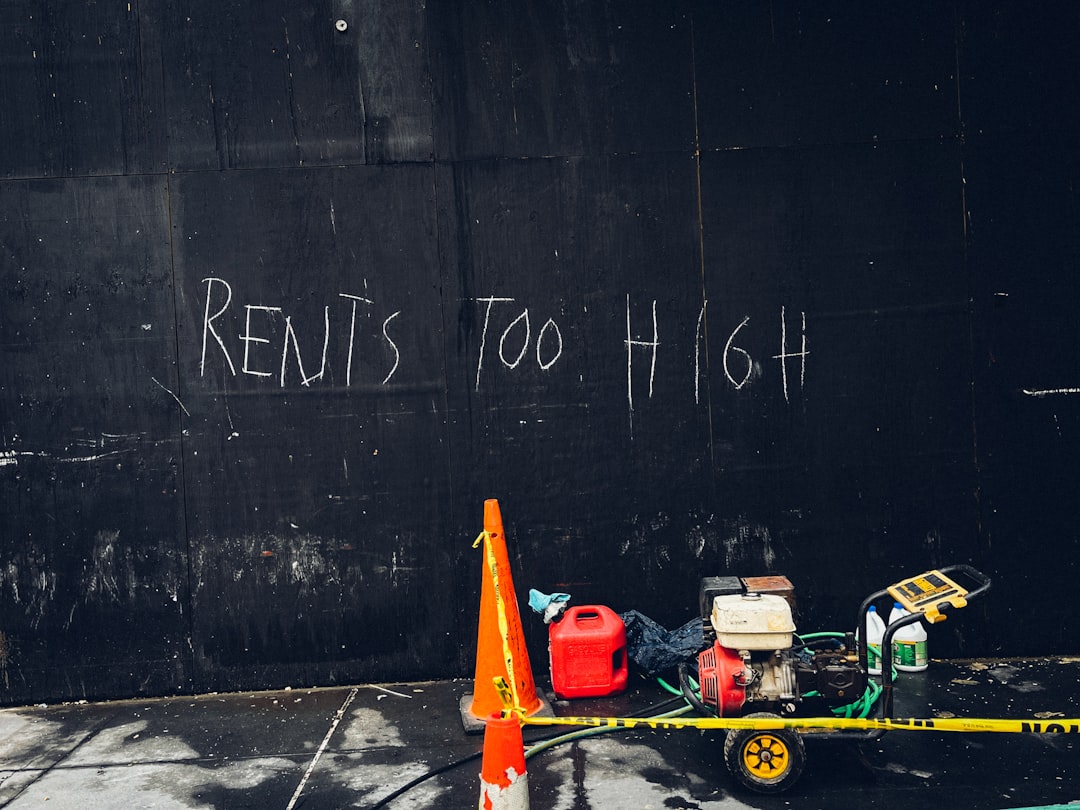
Photo by Jon Tyson on Unsplash
"Renting is throwing money away" is one of the most persistently wrong pieces of financial advice. Whether buying or renting is better depends entirely on your local market, your timeline, and what you'd do with the money you don't put toward a down payment.
Here's how to think about it clearly.
The False Premise of "Building Equity"
Homeownership does build equity — but not as efficiently as people assume. When you pay a mortgage, your payment breaks down as:
- Principal: The part that builds equity
- Interest: Goes to the lender
- Property taxes: Gone
- Insurance: Gone
- Maintenance: Gone
In the early years of a 30-year mortgage, less than 25% of your payment goes to principal. On a $350,000 mortgage at 7%, your first monthly payment of ~$2,329 includes only ~$295 of principal and $2,042 of interest. You're not "building equity" — you're mostly paying the bank.
Renting, meanwhile, frees capital that could be invested. Money you don't put into a down payment and into higher ownership costs can potentially earn meaningful returns in the stock market.
The Price-to-Rent Ratio
A quick way to assess your local market:
Price-to-Rent Ratio = Median Home Price ÷ (Annual Median Rent)
| P/R Ratio | Interpretation |
|---|---|
| Under 15 | Buying is typically favorable |
| 15–20 | Could go either way — do detailed math |
| 20–25 | Renting often makes more financial sense |
| Over 25 | Markets are expensive; renting usually wins on paper |
Example: A $500,000 home vs. $2,500/month rent:
- Annual rent: $30,000
- P/R ratio: 500,000 ÷ 30,000 = 16.7
This is in the "could go either way" zone. More detailed analysis needed.
Context: Many coastal cities (San Francisco, New York, Seattle) have P/R ratios of 30–50+. In these markets, the math heavily favors renting unless you're staying 10+ years and expect significant appreciation.
The True Cost of Owning
Most "buy vs. rent" comparisons undercount the cost of ownership. To be accurate, include:
Monthly mortgage payment (principal + interest)
Property taxes: 1% of home value per year in many markets
Homeowners insurance: $150–250/month typically
PMI: If down payment < 20% ($150–200/month on a $350K loan)
Maintenance: Budget 1–2% of home value annually ($250–600/month)
HOA fees: If applicable ($0–500+/month)
Total ownership cost example (on a $400,000 home, 20% down):
- Mortgage: $2,129/month (7%, 30yr)
- Property tax (1%): $333/month
- Insurance: $175/month
- Maintenance (1%): $333/month
- Total: ~$2,970/month
If a comparable rental is $2,000/month, owning costs $970/month more in direct costs. That $970/month, invested instead, grows substantially over time.
Want more saving guides? Get guides like this in your inbox — Frugal Rise delivers one free deep-dive every week.
What Makes Buying Worth It
Owning can be financially advantageous when:
1. You're staying at least 5–7 years
Transaction costs are high: buying costs 2–5% of price (closing costs), selling costs 5–8% (realtor commissions + misc). If you sell in 3 years, those costs eat much of your equity gain.
The break-even point in most markets — where the accumulated equity and appreciation outweigh the higher cost of ownership vs. renting — is typically 4–7 years.
2. Your local market has low price-to-rent ratios
In markets where P/R is under 15 and appreciation has been steady, buying often wins over long time horizons.
3. You expect significant appreciation
Appreciation is the wildcard. In cities with constrained housing supply and job growth, appreciation can dramatically shift the math. But appreciation is not guaranteed — real housing prices have had extended flat or declining periods in many markets.
4. Fixed housing cost is important to you
A fixed mortgage payment provides certainty that rent cannot. Over 30 years, your mortgage payment stays (mostly) flat while rents can double. This is a real benefit, not captured in short-term comparisons.
5. You value control and stability
Owning lets you renovate, have pets, choose your neighbors (to a degree), and stay as long as you want without a landlord's decisions affecting you. These quality-of-life factors have real value that doesn't show up in the numbers.
What Makes Renting Smarter
Renting often wins when:
1. You might move in less than 5 years
Career changes, family moves, lifestyle shifts. Transaction costs make short-term ownership expensive.
2. Local P/R ratios are above 20
In expensive markets, the "lost" equity from renting is more than offset by the return on invested capital and avoided ownership costs.
3. You'd invest the difference
The key assumption. If you'd invest the cost difference between renting and owning in a diversified portfolio, you can build substantial wealth through a different path. If you'd spend it, this advantage disappears.
4. You have flexibility as a priority
Renting allows you to move for job opportunities, change your lifestyle, or respond to life changes without being locked into a home.
Running the Real Math
To actually compare, use a full buy vs. rent calculator (NYT has a well-regarded free one; simply search "NYT buy or rent calculator").
Key inputs:
- Home purchase price
- Down payment amount
- Mortgage rate
- Comparable rent
- How long you plan to stay
- Expected home price appreciation
- Your expected investment return if renting
The "right" answer changes dramatically based on these assumptions. In a market expecting 3% appreciation, buying over 10 years with a reasonable mortgage may significantly outperform renting. In a flat-appreciation market with a 25x P/R ratio, renting + investing the difference often wins.
The Non-Financial Factors
Purely financial analysis misses important considerations:
- Stability for children: School districts, consistency, roots in a community
- Renovation and personalization: Ability to make the home yours
- Pet ownership: Many rentals restrict pets
- Privacy and control: Detached homes vs. shared walls
- Pride of ownership: Real psychological value for many people
These factors are real. For some people, they're decisive. The financial comparison is one input, not the only one.
The Bottom Line
Renting is not throwing money away — it's purchasing housing services and optionality. Buying is not automatically better — it's leveraged homeownership with high transaction costs and significant ongoing expenses.
The better choice depends on your local market (check the P/R ratio), your timeline (plan to stay 5+ years?), your flexibility needs, and what you'd do with the money you'd otherwise put in a down payment.
Do the math for your specific situation. The generic answer almost always misses what's actually true for you.